Public Channels
- # ai4pacificislandseabirds
- # animal_re-id
- # audio
- # biodcase-active-learning-community
- # camera-traps-hardware
- # camera_traps
- # camtrapai-workshops
- # cv4animals
- # cv4plants
- # cvml-solutions-for-challenging-real-world-conservation-problems
- # datasets
- # elephant_id_database_general
- # esa_2023_happy_hour
- # general
- # geometric_embedding_analysis
- # help_needed
- # jobs
- # marine
- # movement
- # new_papers
- # news
- # ourpapers
- # petitions
- # proj-id-and-count-salmon
- # public-engagement
- # random
- # region-pnw
- # region-us-ne
- # region-us-sw
- # resources
- # tdwg_ml
- # upcoming_events
- # vibe-coding-party
- # visualization
- # what-is-that
- # wildlifeinsights

@Stefan Schneider has joined the channel
set the channel description: For conversations about animal re-identification from camera trap images


@Jeffrey Thompson has joined the channel

@Ștefan Istrate has joined the channel


@Riccardo Pressiani has joined the channel


@Heather Lynch has joined the channel

@Alex Borowicz has joined the channel


@Henrik Cox (Sentinel) has joined the channel


@Ekaterina Nepovinnykh has joined the channel

@Nathaniel Rindlaub has joined the channel


Hey guys. Open Ocean Cam (openoceancam.com) is currently working on a funded project in Humphead Wrasse ID & Re-ID.
These animals are heavily trafficked into Hong Kong & other territories and the software would be used by citizen scientists to be able to spot illegally imported individuals (substantial amount versus limited legal import quota)
Would love to chat with any of you in Re-ID especially @Jon Van Oast and WildMe

heya @Mike C... better late than never?
Hi @Jon Van Oast, @Jason Holmberg (Wild Me) delighted to have a chat, the app is scheduled to go live on Play Store and iOS this week 😁
Would be fantastic to have a chat to see how we can collaborate. We might have datasets to contribute in future and would love to chat tech in general

Should we set up a time next week? Also, @Mike C thanks for offering to share data! Annotated face data for wrasse may be helpful in our future research!
@Mike C we are jason@wildme.org, jon@wildme.org, and parham@wildme.org
@Jason Holmberg (Wild Me) has joined the channel
@Mike C I'm definitely interested and would love to talk further

@Stefan Schneider can you rename this channel to animal_re-id?
has renamed the channel from "animalre-id" to "animal_re-id"

Hi,
Would anyone here know of any re-id datasets on big cats. I am aware of Amur Tigers, but are there any public datasets for leopards/jaguars/snow leopards or other such species? Any pointers will be helpful.
Cheers!
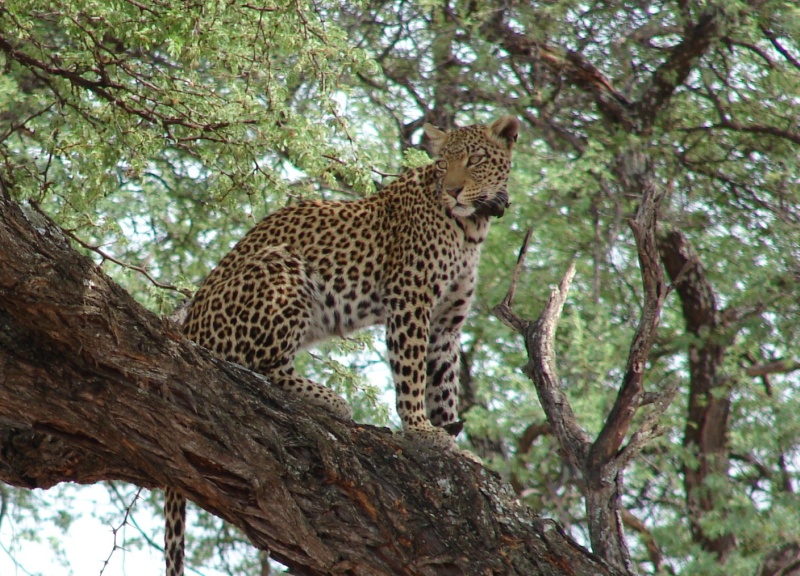
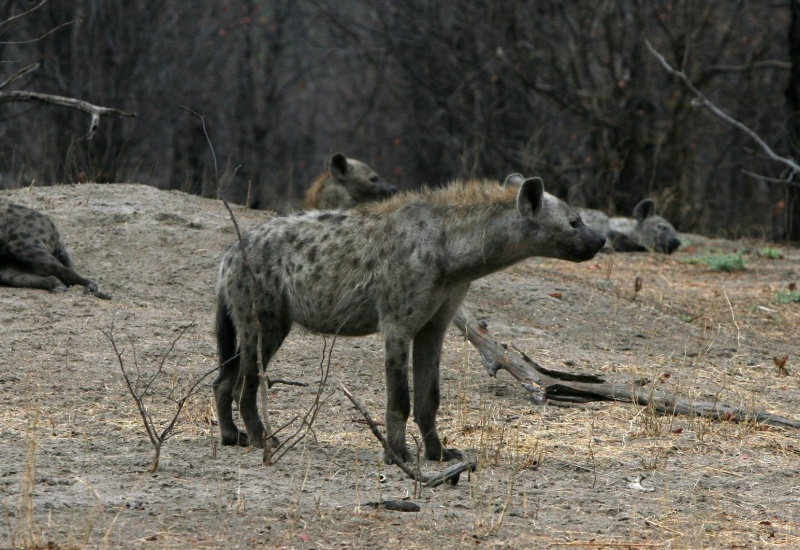
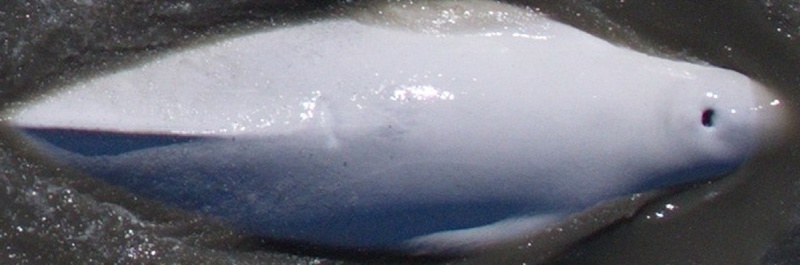
Hi all (and especially @Saket Anand who asks a question above), Wild Me (wildme.org) pleased to announce the release of three new reID datasets for leopards, spotted hyenas, and belugas:
https://lila.science/datasets/leopard-id-2022/
https://lila.science/datasets/hyena-id-2022/
https://lila.science/datasets/beluga-id-2022/
Many thanks to @Dan Morris for assistance in helping us post these and to Microsoft for hosting lila.science, as well the Gordon and Betty Moore Foundation that helped fund some of the work that went into building these datasets and supporting the related research communities. Permission for usage was provided by NOAA (belugas) and the Botswana Predator Conservation Trust (leopards, hyenas).
Additional information is provided with each dataset t the links above. Each has been sanitized to protect wildlife (dates and locations removed, IDs anonymized to UUIDs).
We hope you'll find these useful in your own work and research.
Hi @Jason Holmberg (Wild Me)! Thanks a lot for sharing these! These are great!

A new exciting paper on combining AI and Human expertise to improve the performance of felid's Re-id studies, including UX, and difference in the ecologist goal (density)...hoe ever expert observers were needed to obtain the most accurate estimates in felids 😅

Hi everyone,
I’m Anton Alvarez, a biologist participating in the “AI for Bear” challenge organized by@Sako Arts.
In my exploration, I’ve delved into the MegaDescriptor and the Wildlife Tools library.
Thanks for the work @Vojta Čermák @Lukas Picek @Lukáš Adam and @Kostas Papafitsoros!!
Remarkably, by employing just the pre-trained tiny model, I achieved an 80% Top-1 accuracy on one of our datasets. Interestingly, moving to the larger-224 model yielded only a 1% improvement.
The truly surprising moment came when, after just one training epoch with the bears' faces, we reached a Top-1 accuracy of 100%, significantly up from the 95% accuracy using ArcFace loss.
I’m reaching out to see if anyone else has experience with the MegaDescriptor. Your insights or any assistance would be incredibly valuable, especially since these results almost seem too impressive to be realistic.
I’ve shared the collab link for anyone interested in taking a closer look. Thanks in advance for any feedback or shared experiences!



No experience with Megadescriptor, but with Multispecies re-ID I believe @Lasha Otarashvili has seen similar, incredibly high top-1 ID prediction accuracy for Amur tigers and the Tunisian horse face dataset, which we have viewed more as a signal that the dataset is relatively small and not diverse enough in terms of the imagery available for each individual. The datasets are still useful in a cluster of real world, multispecies ID modeling, but I would be surprised in a single species context if the 98%+ ID prediction accuracy generalized well outside of the training data.

Hi @Antón Álvarez, and thank you for the shout-out! ❤️ It is highly appreciated!
Regarding performance, I partially agree with Jason that it is most likely a sign of overfitting to some characteristics of your dataset or partial train --> test data leakage. However, I’m impressed by the zero-shot performance (80%), as it never saw any bear.
Speaking about what MegaDescriptor “has seen” during training. What do you think about providing data for the future development of MegaDescriptor-V2?

Ditto - a perfect 100 often tells as much about the data and it does about the model. From a production perspective, this means ‘with real data, expect good performance, but not THAT good'. A good look at the data should tell more. A major factor contributing to data being 'easy' is the camera perspective being homogenous concerning the animal’s features. This can be due to pictures taken in burst mode, or an alignment pre-processing step. Creating images that look very similar or ‘near duplicates’.
Sometimes you might get these ‘near-duplicates’ in clusters. Think of 3x2 bursts of 2 images of the same individual captured during 3 separate encounters with some time between encounters. Each of the same encounter pairs will be much more easily matchable against its counterpart than it will be with the rest. In such cases, top-1 accuracy is misleading as the perfect score can be achieved by correctly matching just one of all valid samples. mAP is more balanced for capturing performance across all valid samples - some of which can be more diverse. Drawback is that mAP is less directly interpretable. High rank-1, low mAP is often a sign of ’near-duplicates’ being present in the data.
Thanks for sharing the work @Antón Álvarez. Also, cool to see MegaDescriptor zero-shotting this.

Thanks all for your feedback! Sadly we are not able to share the data since it is property of BearID. However I can give you some more insight on the data. We've build a very performant bear face detector to pre-process the data so there will indeed be little variation in the image, but that's kind of the point, we do not align the images though.
The dataset is quite significant containing ~5k images of ~150 individuals with several having 50+ sightings.
I agree train test leakage seems likely though we took great care in crafting the train test splits base on literature, however, testing to validate this is still in progress.
Regarding that the problem might be too easy, next to MegaDescriptor we are trying various other models like LightGlue and metric learning (with different backbones and loss functions), and none of them scored 100% where the best other performing model is a fintuend ArcFace Covnext metric learning model.
Hi @Sako Arts, Thank you for some insights. What I would suggest to prevent the data leakage. Just do the train/test split using the information about location or time. For example, use encounters from different days or locations.
I've found the bug that was causing 100% accuracy; now it's at 92% with the basic model. These results are more believable. The error was in my evaluation code, although the zero-shot accuracy is correct.
@Lasha Otarashvili Thank you for the explanation about Top-1 and mAP.
@Lukas Picek Does the MegaDescriptor have any capability to generate saliency maps, or are you considering incorporating this feature in MegaDescriptor 2? From my experience as a biologist working with the Iberian lynx, this feature is crucial for the usability of MegaDescriptor. For instance, I would prefer using SIFT (72% accuracy) over MegaDescriptor (75% accuracy) for leopards. However, this also depends on the species; for example, for the heads of sea turtles or animals that can be easily identified by a human, I wouldn't see the need for saliency maps as much. But I am biased towards the lynx, which is difficult to identify.
@Jason Holmberg (Wild Me)Wild Me employs a metric learning approach with saliency maps that I appreciate, but they are more complicated to interpret than the ones from HotSpotter.
@Antón Álvarez I agree. Hotspotter's visualizations are easy to understand and relate to. MiewID's Grad-CAM based visualizations are good for checking in on training results, but they're not very useful in a production environment when evaluating match candidates. Worse, deep learning can pick up on features that are less relatable to humans than more obvious patterning (e.g., beluga dorsal ridges versus scars), and adding visualization can significantly add to inference time and eat up disk space. Wild Me might run 2-5k ID jobs per day across our platforms on average, and we actually turn off MiewID visualization in most cases to optimize for speed. Even for Hotspotter, we try to delete visualizations within two weeks as they eat up disk space quickly. Visualization is very much an active field of research, and we're looking for solutions that are better than Grad-CAM and more relatable.

Is anyone using IBEIS / Hotspotter? The original Hotspotter paper has 2 different models (one-to-one and one-to-many), but it seems like IBEIS only provides the one-to-many model. Any idea if I can get the one-to-one model working on IBEIS?
@Jess Tam We run HotSpotter in the Wildbook platform but are replacing it quickly with the MiewID algorithm (multispecies) for scalability reasons.
Which species are you working on with HotSpotter?
I'm trying to re-id an unknown population of feral cats, hence wanting to get the one-to-one model working since we have no existing database. What is your experience with MiewID?
This is our current multispecies production model for MiewID:
https://huggingface.co/conservationxlabs/miewid-msv2
Very good but feral cats are hard and has no feral cat training data (yet).

I see, maybe this domestic cat dataset might help?: https://wildlifedatasets.github.io/wildlife-datasets/datasets/#catindividualimages
I'll give it a go anyways since I see that it's been trained on other patterned species, thanks heaps!
Just a fair warning that we normally run a detector model to match same viewpoint and normalize orientation in advance of ID. miewid-msv2 is powerful but generally trained on relatively clean mark-recapture datasets. Advance study design on which features and viewpoints to match is important.
Thanks for the heads up, would there be a script somewhere that I can reference?

Hi @Jason Holmberg (Wild Me) , is there a way to cite miewid, eg paper or report?
@Lasha Otarashvili How would you like to cite MiewID, and should we add a citation.cff file to the repo?
Hi @Kostas Papafitsoros a writeup is underway. I have added a way to cite here
@Jess Tam Hi Jess, example notebooks are great to get going fast. They are done on a Beluga dataset that is single-viewpoint, though. For multiple distinct viewpoints (such as left vs right) for species that do not exhibit bilateral symmetry, the go-to approach is to handle each viewpoint+name combination as a separate individual. This can be done by configuring the name_keys argument. Conversely, there are cases where this is too aggressive, such as when you have viewpoints like 'frontleft', 'frontright' and are still partially matchable. In such cases you might opt to let the model learn to match cross-viewpoint, or map them to common 'left' and 'right' depending on experimentation. The model gets quite good at partial matching if the dataset allows for it.
Our general pipeline also includes orientation normalization - rotation only. This is done for legacy for compatibility with other algos we use. The CNN backbone is good at learning invariance. We have been trying to reduce that requirement by training with rotation augmentation, so that the model is not handicapped by it - so not a hard requirement. It is still not fully invariant to extreme (30deg+) rotation for most of the terrestrial species.
If it went unnoticed, I'll put it here.

https://aiforconservation.slack.com/archives/CLWGQ4BJ6/p1730387852031829

What would be the easiest way nowadays to run WildMe's HotSpotter algorithm on a new dataset (e.g. frogs) and visualize matchings like in the image below? I tried the WildBook demo from https://github.com/WildMeOrg/wildbook-ia/ via Docker and the default algorithm seems to only produce some heatmaps. @Jason Holmberg (Wild Me) @Lasha Otarashvili

Hi @Ștefan Istrate,
We recently published a new version of the Wildlife Tools library (https://github.com/WildlifeDatasets/wildlife-tools), which implements local feature matching, as you are showing. Moreover, it includes more recent methods, such as ALIKED, SuperPoint, LightGlue and LoFTR, and also allows you to combine multiple of them using calibrated fusion (https://arxiv.org/abs/2408.12934) for even better results.
Let me know if that fits your use-case or have any questions or encounter any issues.
You can visualize the matching process using our library to produces figures as follows:
This is the way to go!

@Vojta Čermák - I am exploring your library. Can you point to the code blocks which can generate the above visualization.
HI, the visualization is from this notebook.
https://github.com/WildlifeDatasets/wildlife-tools/blob/main/examples/example-pairwise-sim.ipynb
The visualization function visualise_matches is from:
https://github.com/WildlifeDatasets/wildlife-tools/blob/main/wildlife_tools/similarity/pairwise/utils.py
Let me know if you are able to replicate that.
 <a href="https://github.com/WildlifeDatasets/wildlife-tools">WildlifeDatasets/wildlife-tools</a>
@Vojta Čermák, thanks! I think I gave it a try a few months ago, but didn't go all the way to generating visualizations because I couldn't find enough matching features for my frogs (which change their patterns over time, increasing the size of their black spots). Let me try to pick it up again next week and I'll be in touch with you directly to make sure I use the library correctly.


@Yunxuan Chai (wsyxbcl) has joined the channel


@Edwin Arkel Rios has joined the channel
@Edwin Arkel Rios has left the channel
@Edwin Arkel Rios has joined the channel